 Technology is one of the largest ongoing investments many financial firms make, yet it's often one of the least predictable.
A server unexpectedly fails. Employee laptops reach the end of their useful life. Cybersecurity requirements change. Software subscriptions increase. New compliance expectations emerge. Suddenly, what seemed like a manageable IT budget becomes a series of unexpected expenses.
For financial advisors, wealth management firms, CPA practices, and insurance agencies, technology shouldn't be treated as a collection of surprise purchases.
It should be planned with the same discipline as any other business investment.
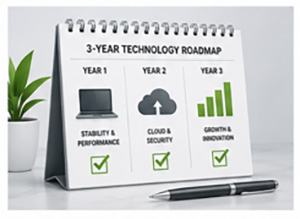
A multi-year technology roadmap helps organizations replace uncertainty with predictability, allowing leadership to budget more effectively while ensuring technology continues supporting business growth.
Technology Is an Investment, Not an Expense
Many businesses still approach technology reactively.
A computer breaks.
A server fails.
Software becomes unsupported.
Only then does the conversation begin.
While emergencies can't always be avoided, most technology investments are highly predictable.
Workstations generally follow replacement cycles.
Networking equipment eventually reaches end of support.
Software licensing changes over time.
Cybersecurity programs continue to evolve.
When these investments are anticipated instead of delayed, organizations avoid large unexpected expenses while maintaining a more secure and productive environment.
The goal isn't spending more.
It's spending smarter.
Plan for Hardware Replacement Before It Becomes a Problem
Every piece of technology has a useful lifespan.
Waiting until equipment fails often results in rushed purchasing decisions, unplanned downtime, and frustrated employees.
Instead, successful organizations develop replacement schedules that spread costs over multiple years.
Rather than replacing every workstation at once, they budget for a portion of devices each year.
Networking equipment, servers, wireless infrastructure, and other critical systems can be managed the same way.
Predictable replacement cycles improve reliability while making budgeting far easier.
Cybersecurity Is Now a Permanent Budget Item
Cybersecurity is no longer a one-time project.
It's an ongoing business function.
Security awareness training.
Multi-factor authentication.
Microsoft 365 security.
Endpoint protection.
Backup monitoring.
Identity management.
Cyber insurance requirements.
These are recurring investments that should be expected as part of normal business operations.
As cyber threats continue evolving, organizations that budget for ongoing improvements are better positioned to protect client information while avoiding costly emergency projects.
Software Costs Continue to Evolve
Many businesses have transitioned from purchasing software outright to subscription-based licensing.
Microsoft 365.
Business applications.
Cloud storage.
Security platforms.
Industry-specific software.
While subscription models reduce large upfront purchases, they also require organizations to monitor recurring operational costs carefully.
As employee counts grow and new services are added, those monthly expenses can change significantly over time.
Regular reviews help ensure software investments continue delivering value while avoiding unnecessary licensing costs.
Technology Planning Supports Business Growth
Technology budgets shouldn't exist independently of business goals.
If leadership plans to hire additional employees, expand locations, acquire another firm, or introduce new services, technology should be part of those conversations from the beginning.
Growth often requires additional infrastructure, cybersecurity improvements, software licensing, collaboration tools, and user support.
Planning for those investments early helps organizations avoid delays while ensuring technology enables growth instead of slowing it down.
Technology should never become the bottleneck.
How Linear 1 Technologies Helps Financial Firms
At Linear 1 Technologies, we believe budgeting should be one of the least stressful parts of managing technology.
We work with financial advisors, wealth management firms, CPA firms, and insurance agencies throughout Central Ohio to develop technology roadmaps that align with business goals, equipment lifecycles, cybersecurity priorities, and long-term planning.
Rather than reacting to unexpected expenses, our clients have greater visibility into future technology investments, allowing them to make informed decisions with confidence.
Predictable planning leads to better business outcomes.
A Question to Ask During Your Next Budget Meeting
As you prepare your next annual budget, ask one simple question.
"If our technology budget doubled unexpectedly next year, would we know why?"
If the answer is no, it may be time to build a longer-term technology roadmap that identifies expected hardware replacements, cybersecurity investments, software licensing, and business growth initiatives before they become unexpected expenses.
Technology shouldn't surprise you.
It should support your business with consistency and predictability.
Frequently Asked Questions
How often should financial firms update their technology budget?
Most organizations should review their technology budget annually while maintaining a rolling three-year technology roadmap. This provides enough visibility to plan for equipment replacements, cybersecurity improvements, and future business growth.
How long should business computers last?
While every organization is different, many businesses replace employee workstations approximately every four to five years to maintain performance, security, and manufacturer support.
Should cybersecurity be included in our annual technology budget?
Yes. Cybersecurity is an ongoing operational investment rather than a one-time purchase. Organizations should budget for security software, employee awareness training, Microsoft 365 protection, backups, monitoring, and future security improvements.
What's the biggest mistake businesses make when budgeting for technology?
Many organizations wait until equipment fails before planning replacements. Developing a multi-year technology roadmap helps reduce unexpected expenses while supporting better business decisions.
Can a managed IT provider help us develop a long-term technology roadmap?
Absolutely. An experienced managed IT provider can help forecast hardware replacement cycles, software licensing costs, cybersecurity investments, and future technology needs so leadership can budget with greater confidence.