 Cybersecurity isn't a single product or a one-time project.
It's an ongoing commitment to protecting your business, your employees, and the clients who trust you with sensitive financial information.
For financial advisors, wealth management firms, CPA practices, and insurance agencies, strong cybersecurity requires more than installing antivirus software or enabling multi-factor authentication.
It requires a thoughtful strategy that combines technology, employee awareness, business planning, and continuous improvement.
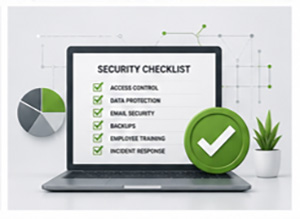
While every organization has different needs, the following checklist highlights many of the foundational areas every financial firm should regularly review to build a stronger security posture.
Protect User Accounts and Identity
Every employee account represents a potential entry point into your business.
Identity security should be one of the first priorities in any cybersecurity strategy.
Your organization should review whether:
- Multi-factor authentication is enabled wherever possible.
- Employees use strong, unique passwords.
- Password managers are available and encouraged.
- Former employees are removed promptly from all business systems.
- Administrative privileges are limited to employees who genuinely need them.
- User accounts are reviewed regularly for unnecessary access.
Protecting identities is often one of the most effective ways to reduce cybersecurity risk.
Secure Microsoft 365 and Business Applications
Many financial firms rely on Microsoft 365 as the center of their daily operations.
Email, document sharing, Teams, OneDrive, and collaboration tools all contain valuable business information.
Review whether your organization has:
- Appropriate email security protections.
- Multi-factor authentication enabled.
- Conditional access policies where appropriate.
- Secure file-sharing practices.
- Data retention and recovery capabilities.
- Regular monitoring for unusual account activity.
Cloud platforms are incredibly secure when configured properly, but they still require active management.
Prepare for Cyber Incidents Before They Happen
Every organization should assume that security incidents are possible.
Preparation significantly improves recovery.
Ask yourself:
- Do we have a documented incident response plan?
- Do employees know who to contact during a cyber incident?
- Have we tested our recovery procedures?
- Are backups verified regularly?
- Can we restore critical systems quickly?
Planning ahead reduces confusion when every minute matters.
Strengthen Employee Awareness
Technology alone cannot stop every cyberattack.
Employees remain one of the most important parts of your security strategy.
Consider whether your organization provides:
- Ongoing cybersecurity awareness training.
- Phishing education.
- Clear reporting procedures for suspicious activity.
- Written cybersecurity policies.
- Guidance on AI tool usage and confidential information.
- Regular reminders about evolving cyber threats.
Creating a culture of security is one of the best long-term investments a business can make.
Keep Technology Up to Date
Unsupported technology creates unnecessary risk.
A structured technology lifecycle helps reduce security vulnerabilities while improving reliability.
Review your environment regularly for:
- Aging computers.
- Unsupported operating systems.
- Outdated networking equipment.
- Expired software licensing.
- Firmware updates.
- Security patches.
Modern technology is generally easier to secure than aging infrastructure.
Review Cybersecurity Throughout the Year
Cybersecurity should never become an annual checklist that gets forgotten after it's completed.
The strongest organizations build regular reviews into their business calendar.
These reviews often include:
- Annual cybersecurity risk assessments.
- Quarterly technology reviews.
- Backup testing.
- User access reviews.
- Cyber insurance discussions.
- Business continuity planning.
- Technology budgeting.
Consistency is far more effective than reacting only after problems occur.
Work with Partners Who Support Your Business Goals
Technology decisions affect far more than computers.
They influence client confidence, employee productivity, business continuity, regulatory preparedness, and long-term growth.
Your managed IT provider should help leadership understand risks, develop technology roadmaps, strengthen cybersecurity, and make informed business decisions.
The best technology partnerships extend well beyond technical support.
They become part of your long-term business strategy.
How Linear 1 Technologies Helps Financial Firms
At Linear 1 Technologies, we help financial advisors, wealth management firms, CPA firms, and insurance agencies build practical cybersecurity programs that support both security and business growth.
From managed IT services and Microsoft 365 security to cybersecurity planning, employee awareness, business continuity, and long-term technology strategy, our focus is helping organizations reduce risk while creating a stronger foundation for the future.
Cybersecurity isn't about checking boxes.
It's about building confidence that your business is prepared for whatever comes next.
Continue Building Your Cybersecurity Strategy
No organization becomes fully secure overnight.
Cybersecurity is an ongoing process of evaluating risks, improving technology, educating employees, and planning for the future.
As you review this checklist, identify one or two areas where your organization could improve over the next few months.
Small, consistent improvements often have a greater long-term impact than trying to solve every challenge at once.
The goal isn't perfection.
The goal is continuous progress.
Frequently Asked Questions
How often should financial firms review their cybersecurity program?
Most organizations should perform a comprehensive cybersecurity review annually while reviewing critical areas such as backups, user access, software updates, and security monitoring throughout the year.
What's the most important cybersecurity investment?
There isn't a single solution that protects every organization. Strong cybersecurity combines secure technology, employee awareness, identity protection, business continuity planning, and ongoing risk management.
Is cybersecurity only an IT responsibility?
No. While technology teams play an important role, cybersecurity is a business responsibility. Leadership, employees, and technology partners all contribute to protecting client information and reducing organizational risk.
Can small financial firms benefit from a cybersecurity roadmap?
Absolutely. Organizations of every size can improve security by prioritizing technology investments, employee education, risk assessments, and long-term planning rather than reacting only after problems occur.
Where should our firm begin if we want to improve cybersecurity?
Start by understanding your current environment. A cybersecurity risk assessment provides valuable insight into strengths, vulnerabilities, and opportunities for improvement, allowing leadership to prioritize future investments based on business risk rather than guesswork.
Continue Your Cybersecurity Journey
Then internally link to the other articles in this cluster, for example:
- What Cybersecurity Requirements Should Financial Firms Meet?
- Why Every Financial Firm Should Conduct an Annual Cybersecurity Risk Assessment
- How Can Financial Firms Qualify for Cyber Insurance and Lower Their Risk?
- Is Microsoft 365 Secure Enough for Financial Firms?
- What Should Your Financial Firm Do If It Experiences a Cyberattack?
- How Can Financial Firms Build a Strong Cybersecurity Culture?
- How Should Financial Firms Budget for Technology Over the Next Three Years?
- How Can Financial Firms Prepare for Business Continuity and Disaster Recovery?